
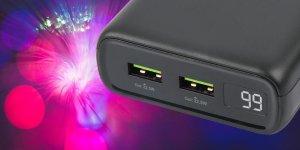
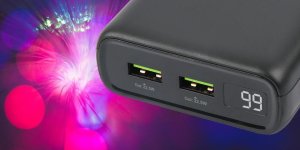

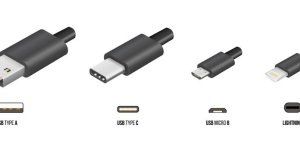



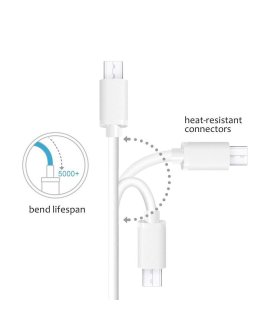

- USB-A to Lightning cable for Apple iPhone / iPad / iPod devices (non-MFI)- Soft rubber cable in high quality- High Quality Charge & Data cable
Extend lifetime and performance on your USB Power Bank & Rechargeable batteries
41470
Love144
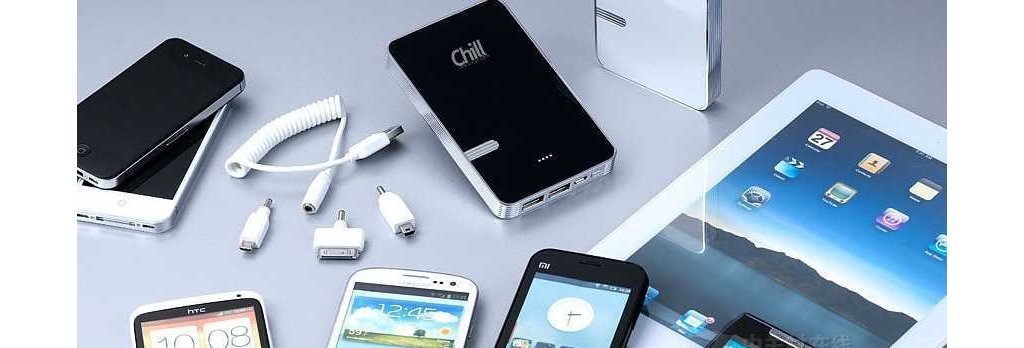
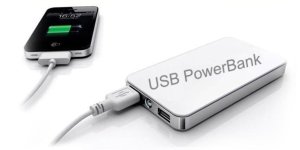
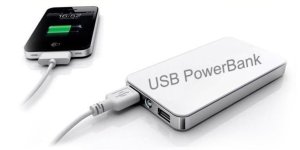
A USB Power Bank or USB Battery are becoming more and more popular in a world in movement, where we all depend on having enough power on our mobile gadgets (iPhone/Smartphone, iPad/Tablet, Camera, GPS etc.)
USB Batteries are a great accessory, so you can always bring your own spare power, instead of having to chase outlets constantly. Therefore, you probably like to get the most out of your USB PowerBank!
Lower Powerbank price means cheaper battery cells and limited safety
The two most important factors in an external USB PowerBank is the Battery cells and the Safety circuit. However, those are also the two most expensive parts. If you have bought a fairly cheap PowerBank from a fairly unknown brand, you can be pretty sure they also use fairly cheap and unknown battery cells, and perhaps also saving on the electronics. In this case, you are probably already doomed, as cheap/poor battery cells just degrade quite fast and will not last long.
If you bought a high quality USB Power Bank from reputable makers you can also expect they care more on using good battery cell quality, safety features and performance. Obviously, this makes the products more expensive, but it will usually give you a better base for good performance and longer lifetime.
However, as with all other battery related products, there are some important guidelines in order to extend lifetime and performance. These are crucial, no matter the quality, as battery cells are made of active chemicals/gasses with limited lifetime. If not treated correctly, all Li-Ion / Li-Polymer cells will gradually degrade/collapse much faster.
Keep these three guidelines in mind to ensure the best possible lifetime and performance on rechargeable batteries:
- Use your USB PowerBank / Rechargeable battery regularly! Minimum one full cycle every 3 month*
- Never keep your USB PowerBank / Rechargeable Battery in a depleted state (for storage ~50-70% is best)
- Avoid exposure to high humidity, direct sunlight and large heat / cold fluctuations.
(* lower grade PowerBanks and rechargeable batteries might require to be cycled far more often)
These are the top three most important things to follow to ensure good performance and lifetime of USB PowerBanks and Li-ion / Li-Polymer rechargeable batteries in general.
If you buy a new PowerBank (or devices with built-in rechargeable Li-ion/Li-Poly batteries) and bring it on holiday for a week or so, and then afterwards just store it for several weeks or months, and even worse in a discharged state. You can be fairly sure it can no longer deliver the initial performance (mAh) anymore and will rapidly degrade further. Since this is not a manufacturing related defect, but a natural behaviour, such depleted batteries / Powerbanks are not covered by any warranty.
Even If exposing your device with rechargeable batteries for excessive heat & cold conditions for even short periods can have a negative effect on the battery lifespan. So avoid exposure to direct sunlight, do not leave the device in a hot car, avoid operating when very cold and during rain/snow etc.
Better USB PowerBanks, like Powerbanks from Chill / Deltaco, actually have a built in safety function, which ensure the batteries are not actually fully depleted, when it is reported as empty. This way it will not take damage if not recharged immediately, but obviously, you should still recharge it within a few days at least. If you intend to store a PowerBank for longer periods, then you should keep it 50-70% charged. This is normally the best storage state for batteries.
USB Powerbank Durability and Lifetime
If these basic guidelines are not followed, the lifespan and performance of even the best Power Banks on the market will be significantly reduced. The expected lifespan of rechargeable Li-ion / Li-Polymer batteries and USB Power Banks depends heavily on individual operating conditions and usage patterns.
Therefore, it is also difficult to give a definitive answer to how long rechargeable Li-ion / Li-Polymer batteries and Power Banks can last. Under optimal conditions, a good USB Power Bank should be able to last for several years. However, regardless of how good their operating conditions are, their capacity will always gradually decrease with age/usage, but this typically happens much faster on inferior and cheaper Power Banks.
Inferior and cheap Power Banks gradually lose their strength right from the start, and even under optimal conditions, it is not uncommon for cells to die after 3-6 months. Typically, battery cells of better quality can still deliver +50-80% of their capacity after ~200-300 cycles, provided they have otherwise had good living conditions.
When batteries (Li-ion / Li-Poly) die/wear out, they will no longer be able to hold the voltage properly. They typically either go flat quickly, or there may be problems with charging stably, or the Power Bank may even appear to be completely dead. The voltage can become so low that the Power Bank's own electronics cannot be properly powered, or the connected equipment will not charge properly.
Li-ion battery cells can also become leaky and release fluid. Li-Poly battery cells (flat) can also bulge out/swell up. Here, a natural chemical process occurs, where gases are developed, which are then trapped inside the "aluminum balloon" they are encapsulated in. In any case, these are indications that the cells are dead/worn out, and they should not be used any longer. Power Banks are normally discarded like other batteries/electronic waste.
Related products

MORE VARIANTS
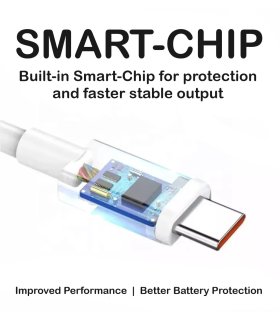
- USB-A to USB-C (USB Type-C) cable- Braided textile or rubber cable (TPE)- Metal housing in both ends (depending on model)- High Quality Charge & Data cable- Choose between several length/colors

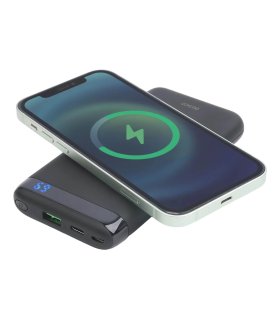
- 10000mAh (37Wh) Li-Poly battery Powerbank- USB-C PD (USB Power Delivery) input/output port- USB-A port with 'Fast Charge' support- 10W Qi certified Wireless Charging with Magnet- LED Display (battery & charging...

MORE VARIANTS
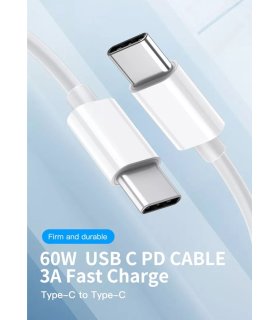
- USB-C to USB-C cable (USB-PD)- 65W USB-PD (USB Power Delivery) support- Braided textile or soft rubber/TPE cable- Metal housing in both ends (depending on model)- Integrated Safety Smart-Chip- High Quality Charge...


- 20000mAh (74Wh) Li-Poly battery Powerbank- 1x USB-C PD (USB Power Delivery) in/out port (max 20W)- 2x USB-A port with 'Fast Charge' support (max 18W)- Fast Charging & USB Power Delivery support- LED lights...


- 10000mAh (37Wh) Li-Poly battery Powerbank- Ultra Slim Design (only 16mm)- 1x USB-C PD (USB Power Delivery) in/out port (max 20W)- 2x USB-A port with 'Fast Charge' support (max 18W)- 1x Micro-USB input (max 18w)-...
Related articles


 English
 Dansk
Dansk
 Norsk
Norsk
 Svenska