
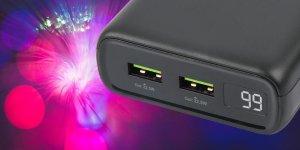
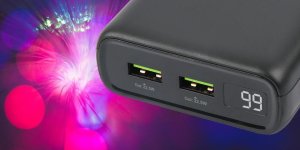





- 10000mAh (37Wh) Li-Poly battery Powerbank- Ultra Slim Design (only 16mm)- 1x USB-C PD (USB Power Delivery) in/out port (max 20W)- 2x USB-A port with 'Fast Charge' support (max 18W)- 1x Micro-USB input (max 18w)-...
What is USB Power Delivery (USB-PD)?
5151
Love1
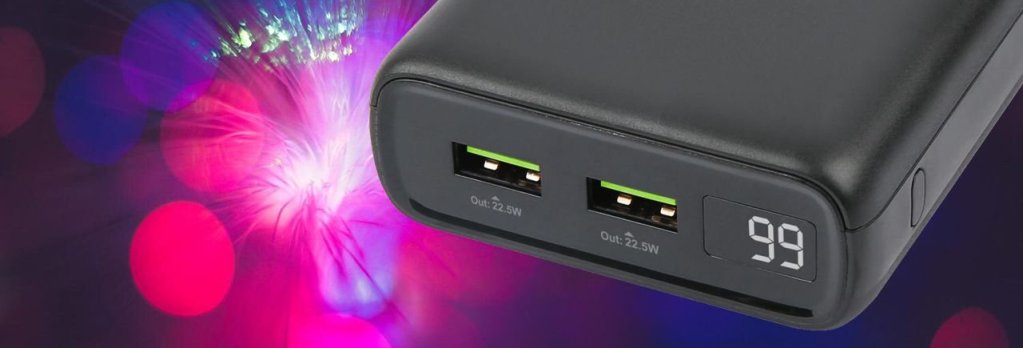
USB Power Delivery (USB PD) is a protocol designed to optimize charging speed and increase compatibility between various devices such as smartphones, tablets, laptops, etc. via the USB-C connector. With USB PD, devices can charge faster and more efficiently, resulting in shorter charging times and better performance.
What is USB Power Delivery?
USB Power Delivery (USB PD) is an advanced charging protocol that allows devices to negotiate and draw the most appropriate power level from the USB charger. This protocol is only compatible with the USB-C connector, which is the latest connectivity standard. The USB-C connector is characterized by its reversible nature, allowing it to be plugged in both ways, eliminating frustration over incorrect insertion.
Advantages of USB Power Delivery
1. Increased Charging Speed: USB PD can currently deliver up to 100 watts of power, which is significantly more than the previous USB standards. This allows larger devices such as laptops and tablets to charge faster.
2. Higher Power and Multiple Voltage Levels: Unlike previous USB standards that only support 5V and limited power (max 5V2.4A = 12W), USB-C PD supports higher power and multiple voltage levels, such as 5V, 9V, 15V, and 20V. This enables efficient charging of a wide range of devices with different power requirements.
3. Universal Compatibility: With USB PD, a wide range of USB-based devices can be charged with the same USB charger / Powerbank. This makes it easier to use one charger and the same cable for multiple devices across product types and brands.
4. Intelligent Power Management: USB PD allows devices to negotiate the required power level, preventing overheating and protecting battery life.
Requirements for Optimal Utilization
To fully utilize USB PD, it is required that both the USB charger, the USB cable, and the device to be charged are compatible with USB PD. This means that a USB PD-compatible charger and a USB-C cable are necessary to achieve the fastest charging times and best performance.
For optimal utilization (faster charging), it requires that your USB charger and/or USB Powerbank are powerful enough to deliver the necessary power that your devices may support. Typically, smartphones / iPhones can draw up to 20-30W, while more power-hungry devices like tablets/iPads and laptops / Macbooks can draw up to 60-100W.
For this reason, USB-C PD chargers and USB Powerbanks come in different versions with varying power (W) and potentially multiple ports (supporting both USB-C PD and traditional USB-A ports). You can certainly use a charger that is more or less powerful than the connected equipment, but the charging time will naturally be limited by the power the charger can deliver and the power the connected devices can draw.
USB-C: New Common European Standard
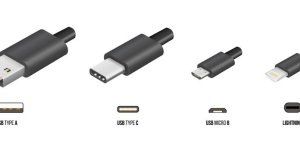
In an effort to reduce electronic waste and increase convenience for consumers, the EU has adopted USB-C as the common standard for charging electronic devices from 2024. This decision means that manufacturers must introduce USB-C as the charging port on all new devices introduced to the market. As a result, Apple has also been forced to drop their proprietary Lightning connector in favor of USB-C moving forward.
USB Power Delivery is revolutionizing the way we charge our devices by offering faster charging, greater compatibility, and intelligent power management across devices and brands. By adopting USB-C as the standard, the EU ensures that consumers can enjoy these benefits regardless of the device they use. With USB PD and USB-C, we can look forward to a future with more efficient and universal charging solutions.
See all the different Chill / Deltaco USB chargers, USB Powerbanks and USB-C cables with USB Power Delivery support here!
Related products


- 20000mAh (74Wh) Li-Poly battery Powerbank- 1x USB-C PD (USB Power Delivery) in/out port (max 20W)- 2x USB-A port with 'Fast Charge' support (max 18W)- Fast Charging & USB Power Delivery support- LED lights...

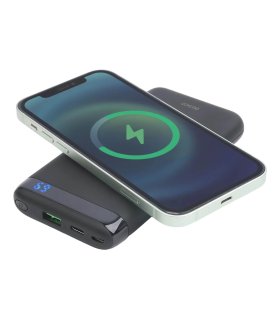
- 10000mAh (37Wh) Li-Poly battery Powerbank- USB-C PD (USB Power Delivery) input/output port- USB-A port with 'Fast Charge' support- 10W Qi certified Wireless Charging with Magnet- LED Display (battery & charging...

MORE VARIANTS
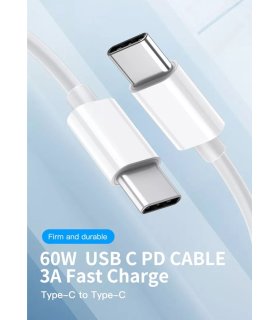
- USB-C to USB-C cable (USB-PD)- 65W USB-PD (USB Power Delivery) support- Braided textile or soft rubber/TPE cable- Metal housing in both ends (depending on model)- Integrated Safety Smart-Chip- High Quality Charge...


MORE VARIANTS
- USB-C to Lightning cable for compatible Apple iPhone & iPad devices- 20W Fast Charge USB Power Delivery (USB-PD) support- High Quality Charging & Data cable- Fast charge your iPhone 8, X, 11, 12, 13, 14 etc.

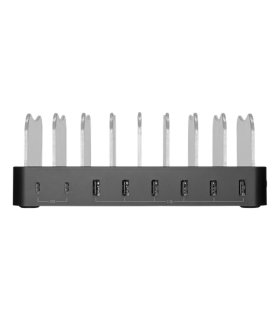
- Deltaco 8-port USB charging station (6x USB-A + 2x USB-C PD) with phone / tablet holders- Powerful 75W continuous total output- 2x USB-C with 20W 'Power Delivery' (USB-PD) multi-volt- 6x USB-A ports with up to...

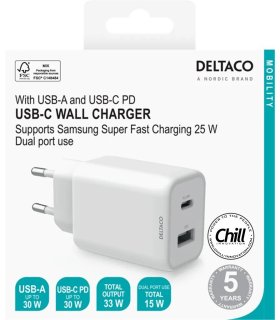
- 2-port USB Charger (1xUSB-A + 1xUSB-C PD)- Powerful 33W multi-volt output- USB Power Delivery (USB-PD) support- PPS (Programmable Power Supply) support- Samsung Super Fast Charging support- iPhone 15/16 Fast...

 English
 Dansk
Dansk
 Norsk
Norsk
 Svenska